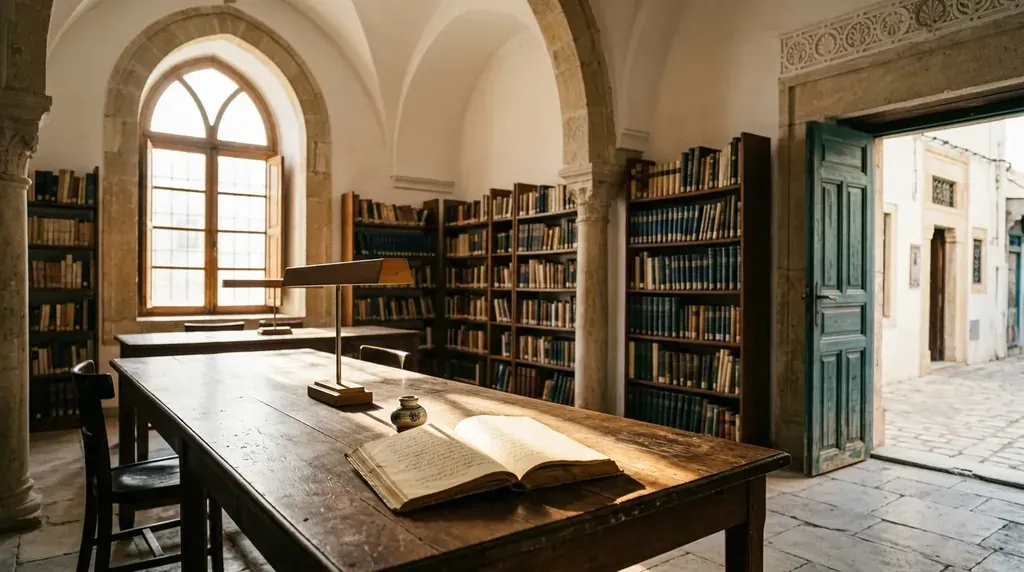
A home library is architecture built to outlast trends. As decorator Thomas Jayne points out, Edith Wharton and Ogden Codman already treated built-in shelving as a room in its own right: one capable of warming a living room and calming an entire house.
Why do built-in libraries never go out of style?
The written word, it seems, encourages the spoken one: conversation flows more easily in rooms lined with books.
Long before it became a trend, the built-in library was already a fixture of the home. Decorator Thomas Jayne notes that Edith Wharton and Ogden Codman were grappling with the question back in their day, thinking through the library, the small sitting room, and even the old-fashioned smoking room together. To them, built-in shelving was never mere decoration: it was a piece of architecture in its own right, made possible by the evolution of bookbinding, which finally let books stand upright on the shelf instead of lying flat.
Jayne also flags a telling difference: France favoured built-ins, while America and England leaned towards freestanding bookcases. He admits his own preference lies with the former: a wall of books built into the walls themselves, rather than set up in front of them.
Should wallpaper and low bookcases topped with artwork be ruled out?
On wallpaper, the verdict comes quickly. Wharton and Codman believed the covering, especially on ceilings, had done real damage to the interiors of their day, and argued for a more pared-back space. A century on, the point still stands: strip back your walls, let the room breathe, and you'll rediscover the very effect they were after.
Low bookcases topped with artwork call for more nuance. A classic nineteenth-century motif, they left Wharton and Codman fairly unmoved. Jayne, for his part, is more forgiving: he likes the visual weight they bring to a room, a presence that grounds a living room without weighing it down.
Which books should you choose to give a library a soul?
For Jayne, a library without books is a room without a soul. If you're not the type to collect rare editions but you do genuinely read, he recommends choosing contemporary titles that reflect your own taste, rather than volumes picked purely for show.
He practises what he preaches at home: in his New York loft, a plain drywall box stripped of any architectural detail, he lives with his husband, a collector of American cookbooks. Between them, they've let some five thousand books take over the space.
Can a wall of books really calm a room?
It's easy to miss, but a well-stocked library changes the way people talk to each other within its four walls. Shelves packed with books absorb sound: less echo, fewer voices raised just to be heard. It's something Jayne has observed first-hand: the written word, it seems, encourages the spoken one, and conversation flows more easily in rooms lined with books.
These book-lined walls often end up hosting the warmest exchanges in the house: people speak more softly, linger longer, without ever needing to raise their voice to be understood. A wall of books, it turns out, quietly shapes the very quality of our conversations.
A library can't simply be decreed into being: it's built shelf by shelf, with the books you actually return to. You don't need a whole wall or a scholarly collection to start: a corner of the living room, a shelf at the end of a hallway, a handful of titles that are truly yours are enough to warm a space and set, without a word, the tone of the conversations held there.
Also on La Sultane
Elevate your interior: decor tips and trends
Going minimalist: how to pare down with Tunisian craftsmanship