In 1918, in his laboratory, the French pharmacist René-Maurice Gattefossé badly burned his hand. Without thinking, he plunged it into the first container within reach: a jar of pure lavender essential oil. Instant relief, and a startlingly quick recovery — the official birth of aromatherapy, already known in the time of the pharaohs but long forgotten.
Today the little vials of essential oil are everywhere: pharmacies, health-food shops, gift stores, hairdressers, beauty salons. New York even has an aromatherapy building, its corridors and lifts flooded with subtle scents — grapefruit and peppermint to wake the neurons in the morning, lavender, rose and ylang-ylang to wind down at night.
So what is aromatherapy?
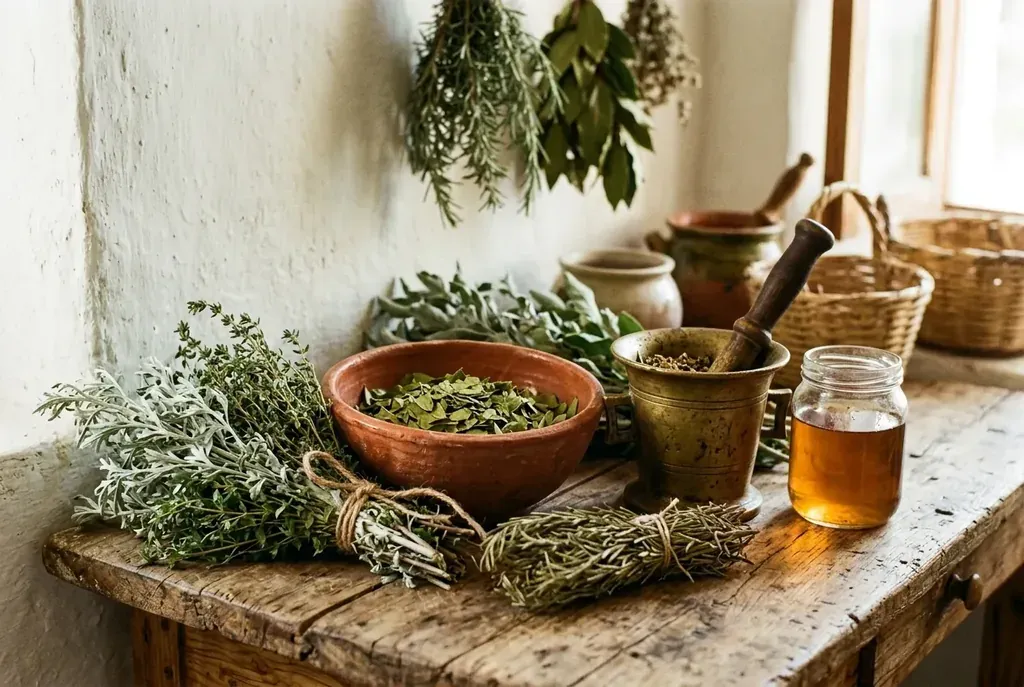
Essential oils are more than a perfume or a flavour. They are aromatics: plant substances carrying molecules that are active and fragrant at once. Steam-distilled from flowers, leaves or bark, they are the true quintessence of a plant. Inhaled, applied to the skin or swallowed, they can relax, tone and purify, and they can also treat a good number of our small everyday complaints.
Bathe the body, settle the mind
Start with bath products, where the oils already come blended into a preparation. Poured into good hot water, they make the water feel almost “alive”: the aromatics are highly volatile, so they evaporate into the bathroom and into the lungs, while the molecules move freely through the water. Fir essential oil, for one, clears the airways, loosens the muscles and tones the body.
Next, mix your own cocktail. Out of the sixty or so pure essential oils in common use, pick the ones that suit what you need — three drops of lavender, orange and ylang-ylang for a guaranteed anti-stress effect. One caution: apart from a few exceptions (lavender, ravensara), pure essential oils should never be used on the skin, because they can burn it. Nor do they dissolve in water, so mix them into a base, a shower gel or a spoonful of vodka.
Aromatherapy to clear the air
Sprayed into the air through a diffuser, essential oils purify the atmosphere and scent it at the same time. Half an hour a day breathing a blend of eucalyptus radiata and thyme guards against winter germs, while a few drops of mandarin and ylang-ylang invite calm. Our sense of smell runs to the limbic brain, waking our memories and our most private emotions, so an essential oil can sound in the unconscious too: essences such as marjoram or petitgrain have a reputation for helping through low spells.
As for the diffuser, one rule holds above all others: never heat an essential oil directly, or you burn it and change its nature. Rule out the metal ring set straight on a light bulb. Better a terracotta or ceramic “brûle-parfum” (scent burner), with a small dish of water warmed by a candle, or an electric diffuser: a pump blows cold air through a Pyrex tube and sprays unheated microparticles of essential oil, which keep all their properties.