Health
The body you come back to : what recovery after childbirth or illness actually involves
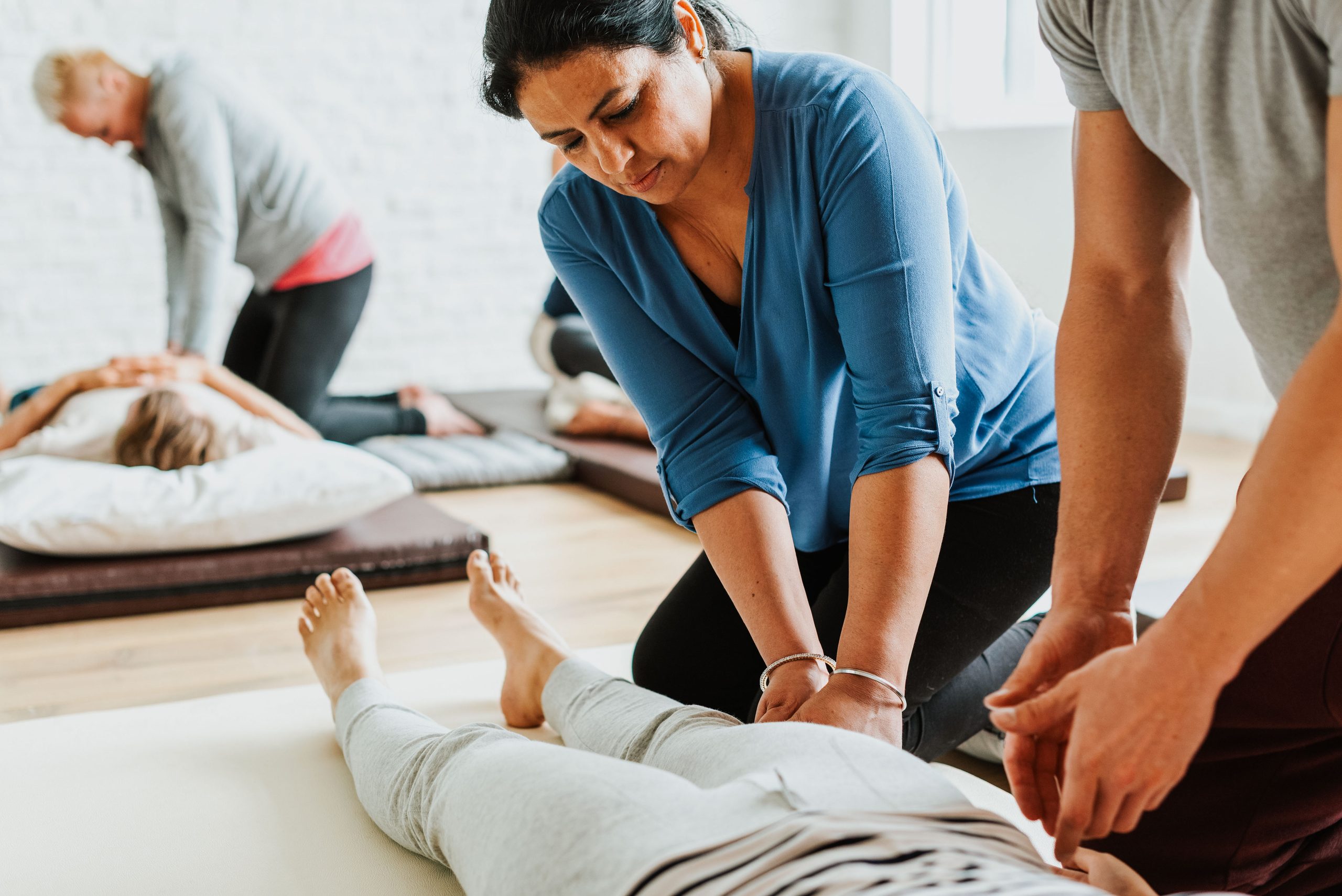
Recovery is a word that promises a return trip. It suggests the earlier body is waiting somewhere, intact, keys under the mat. The medical literature describes something quite different : a long process, uneven from one woman to the next, which depends as much on the biology of tissue as on how much time a woman actually has to let that tissue heal. And that time, in the Maghreb as elsewhere, is not handed out equally.
This article is not about body awareness or wellbeing practices. It deals with the medical side. What the guidelines say about rehabilitation. What the research shows about body image after cancer. And what recovery costs in practice when you have no leave, no coverage, and no physiotherapist within fifty kilometres.
How long does recovery after childbirth really take ?
There is no normal duration. There is a surveillance framework, and it is shorter than what most women live through.
The World Health Organization published its first global recommendations on postnatal care in 2022. They define the postnatal period as the six weeks (42 days) following birth, and recommend a minimum stay of 24 hours in a facility, then at least three follow-up contacts : between 48 and 72 hours, between the seventh and fourteenth day, and again during the sixth week.
That framework organises the detection of complications. It sets no deadline for healing. The six weeks mark a schedule for clinical monitoring, not a date by which a body is supposed to have finished repairing itself. The distinction matters. Many women read the figure as a target to hit, then read their own distance from it as a personal failure.
The rough timeframes cited in the guidelines vary considerably from one woman to another, according to the type of birth, the presence of complications, age and previous pregnancies. The guidelines say so plainly. Everyday conversation does not.
Is pelvic floor rehabilitation always useful ?
No. And the guidelines are markedly more restrictive than common belief, including among health professionals.
The French clinical practice recommendations on perineal and abdominal rehabilitation after childbirth establish that rehabilitation through pelvic floor muscle contraction exercises is recommended to treat urinary incontinence persisting three months after birth, with a high level of evidence (grade A), whatever the type of incontinence. At least three therapist-guided sessions are recommended, combined with exercises at home.
Three qualifications follow. They are rarely passed on.
First, the effect is established in the short term. Rehabilitation improves urinary incontinence at one year, but that benefit is not found again at six or twelve years. Second, early rehabilitation, within the two months following birth, is not recommended (grade C). Third, and this is the least intuitive point : in women without symptoms, no randomised trial has assessed pelvic floor rehabilitation for the purpose of medium or long term prevention. It is therefore not recommended in that indication. That is not evidence of ineffectiveness. It is an absence of data.
Here is a textbook case of the three levels of certainty any health subject requires us to keep apart : established (treating persistent incontinence), debated (how long the benefit lasts), undocumented (prevention in women without symptoms).
After breast cancer surgery, which body do you come back to ?
A body often younger than people assume, and lastingly altered in the way it is inhabited.
A study published in May 2026 in the journal ecancermedicalscience, conducted by Bakloul Nacer and colleagues at the reproductive health reference centre in Taza, in eastern Morocco, analysed 412 confirmed breast cancer cases between November 2016 and December 2024. The mean age at diagnosis was 51.5 years, and 15.8 % of patients were under 40. The authors describe a socio-economic profile marked by precarity and rurality : 53 % of patients lived in rural areas.
On body image, work carried out at the Salah Azaïez Institute in Tunis among one hundred women treated for breast cancer, published in the Bulletin du Cancer, found body image disturbance in 45 % of them, associated in particular with radical surgery and with chemotherapy. The figure says something plain. Roughly half the women concerned no longer recognise the body that comes out of treatment.
Fatigue is the most underestimated symptom of the lot. A meta-analysis published
Why recovery depends first on leave and on pay
in Scientific Reports in 2023 puts the prevalence of severe cancer-related fatigue after treatment at 24.1 %. Follow-up studies report that between 14 and 30 % of patients still describe disabling fatigue one to five years after treatment ends. This is not a subjective complaint at the margins of the pathway. It is part of recovery itself.
On physical activity, the position has shifted. The reference framework published in 2019 by France's National Authority for Health (Haute Autorité de santé) on prescribing physical activity in breast, colorectal and prostate cancers integrated adapted physical activity into the care pathway, with markers of the order of 150 minutes of moderate endurance activity per week and two strengthening sessions. On lymphoedema of the arm after lymph node dissection, the old prohibition on using the operated limb is no longer supported by recent data. These programmes fall under individual medical prescription, never under a woman's own initiative.
Because no medical recommendation can be carried out in a body that has to go back to work.
This is where the three countries of the Maghreb diverge radically.
Statutory maternity leave in the Maghreb
• Tunisia : 30 days in the private sector, with 15 additional days in case of complications ; two months for civil servants (Tunisian labour code) • Morocco : 98 days, that is 14 weeks compensated at 100 % by the National Social Security Fund (Caisse nationale de sécurité sociale), in line with Convention No. 183 of the International Labour Organization • Algeria : 150 days compensated at 100 %, against 90 previously, since Law No. 25-08 of 19 July 2025 amending Law No. 83-11 on social insurance
Thirty days on one side. One hundred and fifty on the other. A Tunisian woman in the private sector returns to work before the postnatal period, as the World Health Organization defines it, has even ended. The sixth week, the one carrying the third recommended contact, happens for her at her workplace.
The Algerian reform is the most ambitious in the region, and it also illustrates the limits of a rights-based approach. As documented in December 2025 by the Mediterranean feminist outlet Medfeminiswiya, it leaves single mothers and adoptive mothers outside its scope because of restrictive administrative interpretations, depends heavily on collective agreements in the private sector, and does not address postpartum mental health.
Income weighs directly on recovery after cancer. The study by Hanane Lemmih and co-authors, published in 2025 in Annals of African Medicine and covering 265 patients at the regional oncology centre in Meknes, puts the global quality of life score at 50.66 out of 100. In that cohort, 81.1 % of the women were unemployed and 45.3 % were illiterate. The authors identify a higher level of education and a monthly income above 3,000 dirhams as factors that improve quality of life.
The care circuit itself is not neutral. In Algeria, the economists Ahcène Zehnati, Marwân al-Qays Bousmah and Mohammad Abu-Zaineh have shown differences in caesarean practice between the public and private sectors, work relayed by the School for Advanced Studies in the Social Sciences (École des hautes études en sciences sociales, EHESS). How a woman gives birth depends in part on where she gives birth, and so on what she can pay.
What the data still does not cover
A great deal, and it should be said.
We found no reliable, recent public data on the density of physiotherapists, the real average cost of a session and its effective reimbursement level in Tunisia, Morocco and Algeria. That is precisely the information that would determine whether rehabilitation guidelines are applicable in the region, or merely readable.
National caesarean rates remain unevenly documented from one country to another, and internal disparities are considerable wherever they are measured : MICS 2023 records 55.4 % of caesareans in Greater Tunis against 27 % in the Centre West. Postpartum mental health, finally, is absent from public provision in the very places where leave has just been extended, which suggests that lengthening the time does not by itself amount to a recovery policy.
The Sultane view
Recovering is not returning. It is inhabiting a different body, with medical markers that give rough timeframes rather than deadlines. The literature is clear on one point : timescales vary, and distance from the average is not a failure.
What varies more than bodies is conditions. Thirty days of leave in Tunisia, one hundred and fifty in Algeria : the same scar does not heal in the same social time. As long as recovery remains a private matter, financed out of the wages of the women who go through it, it will keep being a privilege dressed up as a medical question.
The Editors