Serene queen
Inhabiting the body : what science knows, what it assumes, what it cannot say
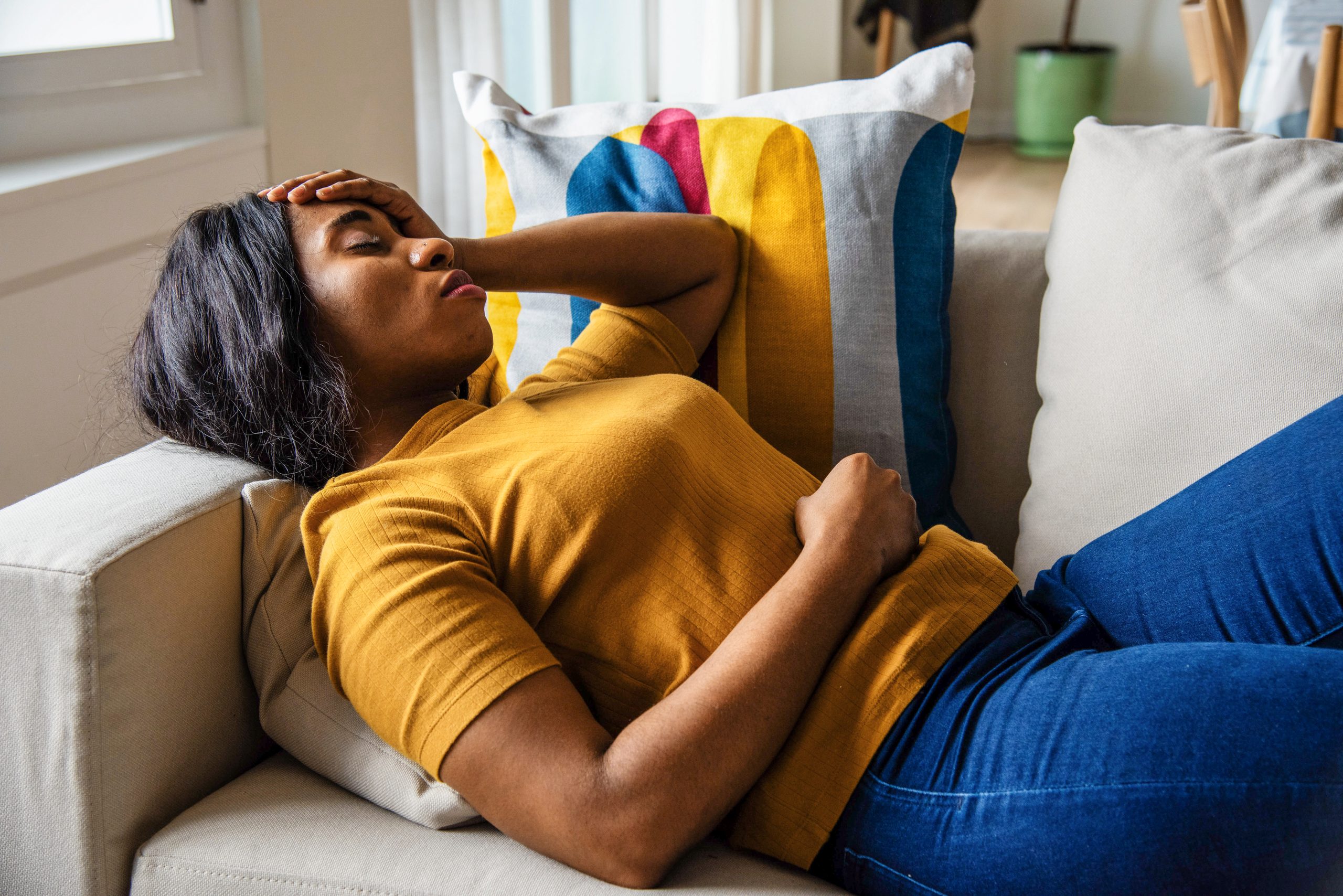
It is a question about women first. The World Health Organization estimates that depression affects around 6 percent of adult women against 4 percent of men, a gap picked up in Nawaat's investigation into anxiety and depressive disorders in Tunisia. Women also fill the studios where these practices are taught. In a region where psychological care stays expensive and scarce, they alone pay, out of pocket, to keep themselves steady.
What exactly is interoception ?
Interoception is the process by which the nervous system detects, interprets and integrates signals coming from inside the body. The definition belongs to Karen Quigley and her team, published in 2021, and it is now the reference. In practice : the beat of the heart, the depth of a breath, a muscle pulling tight, sensation in the gut, and above all the meaning the brain hangs on them.
The concept is not new. The British
Is slow breathing the firmest ground ?
physiologist Charles Sherrington, Nobel laureate in medicine, formulated it as early as 1906, though in a narrow sense limited to visceral sensation. That old reference is mentioned here to situate the history of the term, not as current data. What has changed recently is the fineness of the categories. Sahib Khalsa and colleagues proposed in 2018 breaking interoceptive awareness down into several distinct processes : attention, detection, discrimination, accuracy, insight, sensibility. Put plainly, sensing the body well and believing you sense it well are two different things, and they do not always overlap.
A paper published in Frontiers in Neuroscience in 2022, on interoception as a foundation of everyday participation, names an awkward limitation running through the whole field. Existing measurement tools mostly assess conscious, deliberate awareness, through laboratory tasks such as heartbeat detection, while most interoceptive processing happens outside awareness. We measure badly the very thing we claim to study. The relationship between interoception and emotional regulation is described as bidirectional : bodily signals shape emotional experience, and emotional state in turn alters how the body is perceived.
Yes. This is where the data converge most clearly, and where the mechanism is best understood. A systematic review and meta-analysis led by Sylvain Laborde and his team, covering more than two hundred studies of slow paced breathing, concludes that there is a positive average effect on vagally mediated heart rate variability indices. Heart rate variability refers to the micro variations in the interval between two beats : the wider they are, the more flexible the autonomic nervous system is judged to be.
A scoping review by Federica Giorgi and Roberto Tedeschi, published in Acta Neurologica Belgica in 2025, points the same way. All six studies retained show improved heart rate variability parameters, particularly when the exhale is lengthened. The authors then add the caveat that matters : protocols are not standardised, and long term assessments are missing.
Hold on to the distinction. This work establishes that slowed breathing shifts a physiological marker, measurably and reproducibly. It does not establish that it treats an anxiety disorder, or that it substitutes for clinical care. A moving indicator is not a cure.
Why is the mindfulness research contested ?
Because the methodological quality of the field is weak, and its results collapse the moment they are compared against anything other than nothing. The clearest demonstration is recent : a systematic review and meta-analysis led by Maris Vainre, published in the journal Stress and Health in 2025, pooled 99 randomised controlled trials and more than 16,000 participants on the effect of mindfulness programmes in workplaces and education. Against passive control groups, meaning people doing nothing, the effect is real but small. Against active control groups, meaning people doing another structured activity, there is no longer a significant effect.
The detail of the limitations says more than the headline result. The authors rate overall certainty as very low under the GRADE method. They note that 98 percent of the studies had no pre-registered analysis plan, that all but one carry a high risk of bias, and that 91 different measurement instruments were used to assess the same thing. They also count 41 trials registered more than three years earlier and never published, the classic signature of publication bias : disappointing results stay in the drawer.
The field does correct itself, sometimes bluntly. In July 2025, the journal Scientific Reports retracted a 2023 meta-analysis by Savannah Siew and Junhong Yu, of Nanyang Technological University in
Are there adverse effects ?
Singapore, which had concluded that mindfulness protocols produced changes in brain structure. The editors' stated reason : four studies with no positive result, representing 40 percent of participants, had been excluded from the analysis. The authors dispute the retraction. The episode says enough about headlines announcing that meditation changes the brain.
Yes, they are documented, and mainstream communication rarely brings them up. An international cross sectional study led by Luca Pauly and his team at the Charité in Berlin, published in BJPsych Open in 2021, surveyed 1,370 regular meditators. Around 22 percent report having had unpleasant experiences linked to the practice, and 13 percent report effects classed as adverse, moderate to very severe. A small but real share, under 1 percent, describes lasting consequences.
The risk factors line up with one another. A pre-existing mental disorder appreciably raises the likelihood of an unpleasant episode, and attending intensive retreats raises it further still. An earlier systematic review led by Miguel Farias, published in Acta Psychiatrica Scandinavica in 2020, arrived at an overall prevalence of 8.3 percent of adverse events, with anxiety, depressed mood and cognitive anomalies at the top of the list.
These figures do not invalidate the practice. They draw a profile : the formats that cause trouble are the intensive ones, the long ones, the ones cut off from daily life, undertaken by people who are already fragile. Ten minutes of breathing in the evening does not belong in that category.
What is happening in the Maghreb ?
Here the relationship to the body is framed by a shortage of care that makes the question anything but theoretical. In Morocco, the 2023-2024 annual report of the Court of Auditors (Cour des comptes) describes a system running on empty : 407 psychiatrists for the whole country, public and private sectors combined, of whom only 32 are child psychiatrists, giving a density of 1.13 psychiatrists per 100,000 inhabitants. More than half of prefectures and provinces have no psychiatric facility at all. In Algeria, a review published in the World Health Organization's Eastern Mediterranean Health Journal counted 898 psychiatrists and around 1,368 psychologists, very unevenly spread across the territory.
The figures to keep
• Morocco : 407 psychiatrists, density of 1.13 per 100,000 inhabitants (Cour des comptes, 2023-2024 report) • Tunisia : psychiatrist density moved from 1.26 to 1.25 per 10,000 inhabitants between 2019 and 2021 (Dr Wahid Melki, Ministry of Health, quoted by Nawaat, 2024) • Tunisia : around 20 percent of 15 to 17 year olds show signs of anxiety (MICS6 survey, 2018)
Cost does the rest. In Tunisia, a private consultation is reported at around 80 dinars by Nawaat in 2024, set against the guaranteed interprofessional minimum wage raised to roughly 555 dinars a month on the 48 hour schedule in January 2026. One session, nearly 15 percent of the minimum wage. In Morocco, rates advertised by private practices put a session between 300 and 600 dirhams depending on the city, Casablanca and Rabat being the most expensive. Against those numbers, breathing and walking are not an aesthetic choice. They are the only practices whose marginal cost is zero.
And the hammam in all this ?
The hammam is a relationship to the body documented by social science research, not a therapeutic technique, and that distinction has to be held firmly. A study by Khedidja Adel and Nouria Benghabrit Remaoun published in the Algerian journal Insaniyat in 2014, conducted in Constantine, found that around 60 percent of the women surveyed still went to the hammam regularly, within a longer term decline linked to the spread of the domestic bathroom. This reference predates 2020 and serves here as anthropological grounding, not as current data.
What that work describes is precise : a place where the body is handled, washed, exposed, in a slow timeframe and a dense female sociability. The historiography of the Maghrebi hammam, published in Annales, stresses its function as a space at once egalitarian and distinguishing, structuring the rhythm of days and of the ages of life.
There is, to our knowledge, no clinical study measuring an effect of the hammam on anxiety or on heart rate variability. Crediting it with demonstrated virtues would be as dishonest as filing it under folklore. What can be said fits in one sentence : the region has long had an institution of presence to the body, collective and inexpensive, and its gradual desertion has left nothing comparable in its place.
The Sultane view
Two symmetrical discourses deserve suspicion. The one selling mindfulness as a treatment, when its effects evaporate the moment it is set against an equivalent structured activity. And the one dismissing every bodily practice because the studies are poor, when slow breathing produces a reproducible physiological effect at no cost at all.
Between the two, a defensible position holds. A practice of presence to the body is not care, and in a region where fifteen months separate a request for help from a first appointment, mistaking it for care hands women the responsibility for a system that will not see them. Breathing slowly will never replace an affordable psychologist. That is no reason to stop breathing slowly.
The Editors